Sign Here, Slightly Crooked: The Rubber Stamp Drawers That Keep Local Britain Running
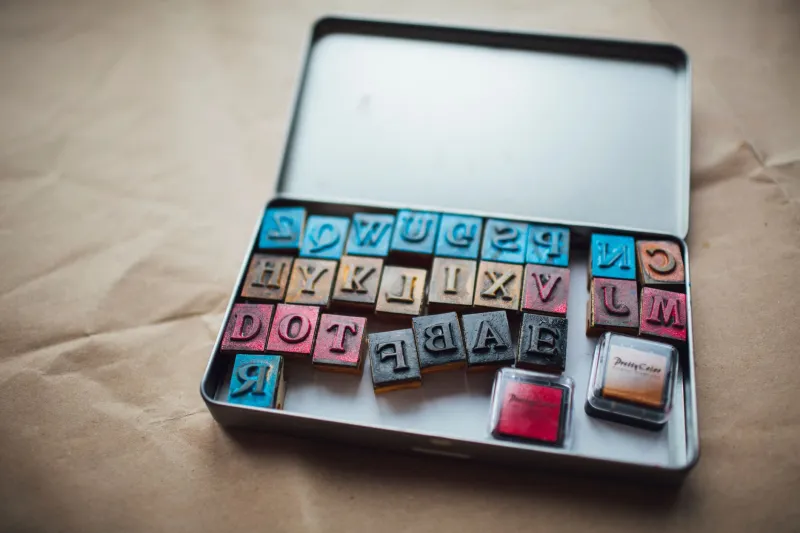
Every village hall has a drawer that smells faintly of rubber and old ink. Open it and you find the real paperwork of local life: a stamp for the allotment society, one for the cricket club, a butcher’s approval mark, a repair café’s cheerful logo, and perhaps a small, severe rectangle reading PAID. None of it looks like design. All of it is.
The Drawer as Archive
A rubber stamp is a small promise that something happened. The meeting was quorate. The raffle ticket was sold. The parcel was received. The marrow was weighed. In a world of emails and drop-down menus, these objects still do a specific job: they make an ordinary moment official with one press of the hand.
What makes stamp drawers so quietly interesting is their inconsistency. A parish council may have a beautifully engraved date stamp from decades ago, its letters still crisp. Beside it sits a hand-cut stamp made by someone who clearly wanted a fish on the allotment newsletter and did not let lack of training stop them. The fish is more memorable than the minutes.
Rubber stamps themselves are not new. They arrived in the nineteenth century and spread through offices, post rooms and bureaucracies. But the stamps that matter here are not the corporate kind. They are the local kind: custom-made, often cheap, frequently repaired, and ordered in tiny quantities by people who need to mark something as theirs.
Wonky Letters, Official Business
Look closely at a stamp drawer and you will find an accidental typography. There are condensed sans-serifs from old catalogue kits, chunky slab letters that look like they belong on a crate, and the occasional script font chosen because it seemed friendly. Sometimes the type is slightly misaligned. Sometimes the border is thicker on one side. Sometimes the whole thing sits at an angle, as if the stamp itself is raising an eyebrow.
That is part of the appeal. A perfectly centred official stamp says: system. A slightly wonky one says: system maintained by Sandra on a Thursday. The smudges are not failures so much as evidence of use. A faded impression, pressed twice because the pad was dry, has the same texture as a handwritten note in a ledger.
Allotment societies are especially good at this. Their stamps tend to carry the society name, maybe a year, maybe a small illustration of a spade or a pea pod. A seed-swap label stamped in purple ink can feel more ceremonial than any laminated sign. Butchers have their own tradition: compact marks for weight, price, approval or provenance, often worn smooth by daily use. Cricket clubs favour crests and dates, while repair cafés produce stamps that look like they were designed on a laptop at midnight and then made real by a man called Dave.
Who Gets to Press Down?
A stamp is a tiny transfer of authority. It says that this person, on behalf of this group, can declare a thing to be so. That is why stamp drawers are also social documents. They show who has been trusted with the ink pad. The treasurer. The secretary. The person who remembers the combination for the cupboard.
In a village hall, the stamp may be kept in a plastic tub with the petty cash and a blunt pencil. At a cricket club, it might live in a tobacco tin in the scorer’s bag. At a repair café, it is probably loose in a drawer beside a heap of fuses. The storage is rarely archival. The result is.
You can read a lot from what gets stamped. Receipts. Membership cards. Raffle books. Plant labels. Cake-box lids. A stamp turns a scrap of paper into a record. It also turns the person holding it into an official, briefly. There is a small, unmistakable pleasure in pressing down hard and lifting away to find that the committee has spoken, even if the committee is three people and a dog.
The Smudge as Signature
A clean stamp is satisfying. A smudged one is more human. The double impression, the corner that did not quite land, the ghost of a previous press on the same page: these are the marks of a real object being used by real hands. In a digital age, that physicality feels less like inefficiency and more like folk art.
This is not nostalgia for bureaucracy. It is curiosity about the small visual language that ordinary groups invent when they need to be official but cannot afford a designer. The rubber stamp drawer is a miniature archive of local identity, filled with repeated phrases and half-legible crests. It records the things a community thought worth marking: payment, membership, attendance, approval, care.
So next time you see a faded purple rectangle on a jam jar label or a plant sale ticket, look twice. Someone chose that typeface. Someone ordered that stamp. Someone pressed it down, slightly crooked, and made a small corner of Britain official for the afternoon.