Look Down, Look Sideways: Britain’s Bollards and the Art of Noticing the Street
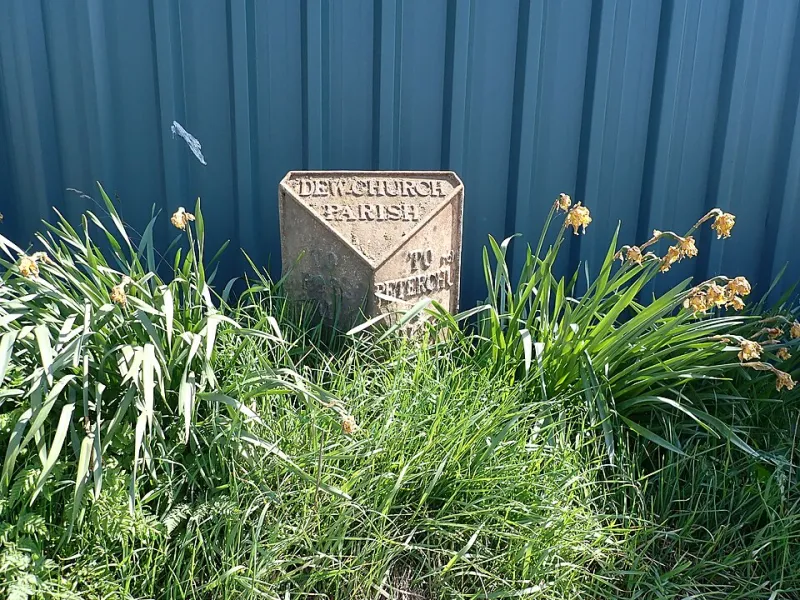
Photo: Eirian Evans, CC BY-SA 2.0, via Wikimedia Commons
There is a particular kind of British sculpture that never gets a plinth, a plaque or a press release. It stands at the edge of the pavement, usually painted black, sometimes streaked with rust, often wearing a halo of scuffed yellow reflective tape. It is the bollard: a small piece of street furniture so ordinary that most of us look straight past it. Which is a shame, because Britain’s bollards are one of the country’s most widespread and least curated forms of public design.
The cannon that became a kerbstone
Start with the showiest member of the family: the cannon-shaped bollard. You will find them near dockyards, canals, old military sites and the sort of quayside developments that like to gesture at a maritime past. Many are cast iron, fluted and finialled, with a stubby barrel pointing at the sky. Some are reputed to have been made from decommissioned cannon; others are simply Victorian foundry work dressed up as naval history. Either way, they are a reminder that street furniture often carries a story it can no longer fully prove.
The cannon bollard is also a useful lesson in how municipal design works in Britain. A council does not usually commission a bollard as art. It commissions a bollard because a vehicle has been clipping a corner, or because a pedestrian precinct needs a boundary, or because someone in highways has decided that a patch of paving needs defending. The result is functional first and expressive second. But give a functional object a fluted barrel and a little domed cap, and you have accidentally made a sculpture.
A loose taxonomy of the pavement
Britain’s bollards do not follow a single national type. They follow local habits, old bylaws, replacement cycles and whatever was in the depot. A rough field guide might include the cast-iron cannon, the concrete lozenge, the steel hoop, the squat mushroom, the rising bollard that appears from the road like a mechanical mole, and the humble traffic cone pressed into service when a proper post has gone missing. The cone is not technically a bollard, but it belongs in the same spiritual family: a temporary object doing a permanent job.
Regional variation is part of the pleasure. Seaside towns have bollards worn smooth by salt and repainting. Market squares have heavy stone or concrete blocks that look like they were installed to stop a tank. London has black-and-white posts and elaborate cast-iron numbers; smaller towns have whatever the local contractor could source. Some streets have a matched set. Others have a visible history of losses and replacements, so that one bollard is tall, the next is short, and a third has been repainted so many times it looks dipped in toffee.
This is not a strict science. It is closer to birdwatching. You notice a shape, then a maker’s mark, then a paint layer, then the way a row of posts follows the curve of a kerb. After a while, the street starts to look like a collection.
The people who collect them
There are photographers and amateur archivists who document Britain’s bollards with real dedication. They photograph them in morning light and wet weather, catalogue their shapes, compare paint colours and note the places where a plain post has been given a decorative collar or a little finial. Some of this work sits in local history groups; some of it lives in sprawling online photo albums where a single bollard can attract comments from three counties away.
What drives that interest is not nostalgia for traffic management. It is the pleasure of noticing a design language that was never meant to be noticed. Bollards are a record of municipal decision-making at ground level: a foundry order here, a post-war replacement there, a bit of Victorian confidence followed by a bit of 1970s practicality. They are also a record of use. A bollard’s paint tells you where cars have nudged it, where dogs have visited it, where bicycles have been chained to it and where the council has given up and painted over the damage.
Why the bollard matters
Street furniture is often treated as the background of civic life, but it is also a kind of public art by default. A bollard marks a boundary, but it also sets a tone. A row of heavy cannon posts says something different from a line of slim steel hoops. A concrete lozenge outside a shopping centre says something different again. None of it is signed, and almost none of it is in a guidebook. That is exactly why it fits the Fragmenta view of things: art, design and oddities pieced together from the bits of the street we usually edit out.
There is also a practical heritage argument. Bollards are vulnerable to replacement. When a street is resurfaced or a junction is redesigned, the old posts can disappear quietly, swapped for a standard design from a catalogue. Sometimes that is fine. Sometimes a small piece of local character goes with them. The people who photograph bollards are not trying to freeze the street in amber. They are keeping a loose inventory of what was there, in the same way others photograph shop signs, manhole covers or pub carpets.
A beginner’s guide to looking
You do not need equipment or a theory. Next time you are waiting at a crossing, look at the post beside you. Is it cast iron or concrete? Does it have a maker’s name near the base? How many colours can you see in the paint? Is it part of a matched row, or a lone survivor? Has it been repaired, tilted, capped, taped or decorated? The answers are small, but they add up to a portrait of a place.
Britain’s bollards are not the nation’s most glamorous sculpture. They are not meant to be. They are the street’s quiet sentinels, doing a dull job with occasional flair. Look down and sideways now and then, and the pavement starts to look less like a surface and more like a gallery.