Little High Streets, Long Memories: Inside Britain’s Accidental Model-Village Archive
Photo: Deben Dave at English Wikipedia, Public domain, via Wikimedia Commons
At Bekonscot Model Village in Beaconsfield, the first thing you notice is not the tiny bricks. It is the tidiness of the civic arrangement: a station, a church, a pub, a high street, a bandstand, all packed into a garden with the confidence of a town planner who has finally been allowed to finish the job.
Bekonscot is the oldest of the bunch, begun in 1929 as a private garden railway and grown into a public attraction and charity fundraiser. It is also a fictional every-town rather than a replica of a specific place. That matters. Bourton-on-the-Water’s model village, built in the 1930s, is a self-portrait of the village itself, complete with its low stone bridges and shallow river. Wimborne Model Town, laid out in the 1950s, began as a fundraising replica of Wimborne Minster’s streets. One is a fantasy, one is a mirror, one is a civic enterprise with a collecting tin.
All three are usually filed under family days out. But they are also something less official: an accidental archive of ordinary British architecture and the social rituals that gather around it.
The high street at one remove
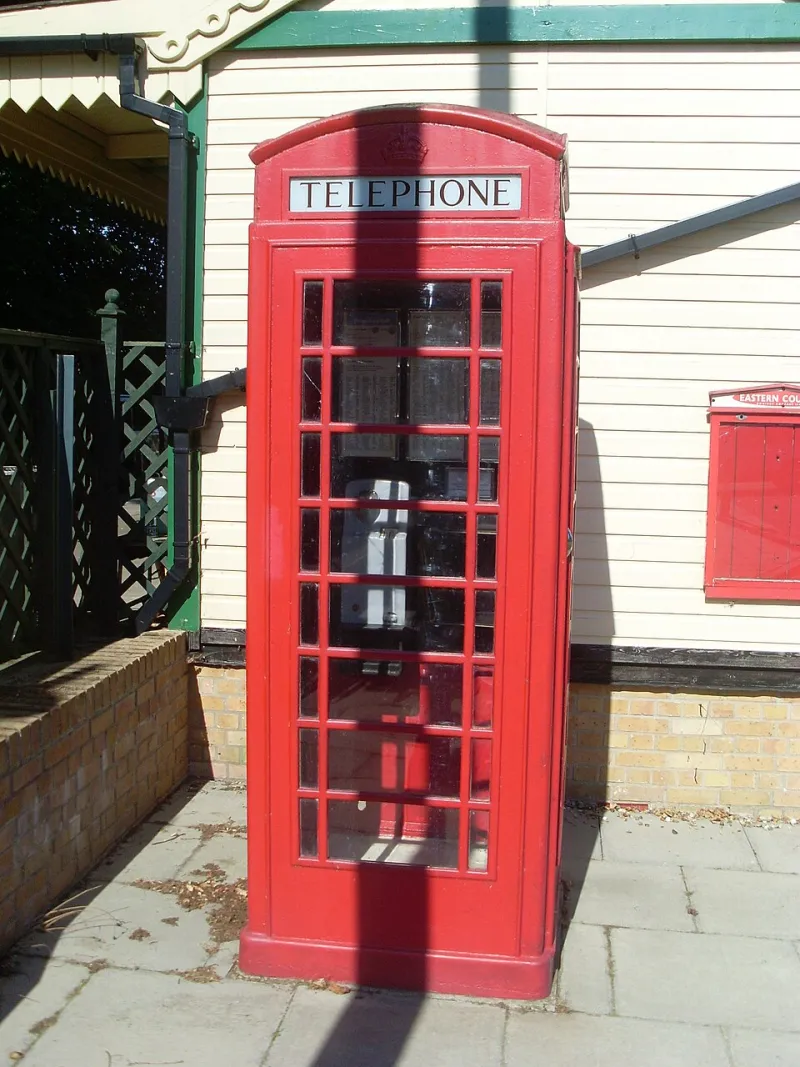
Model villages are not grand-architecture museums. They are not stuffed with cathedrals and country houses, or not only. What they preserve is the visual grammar of the everyday town: painted fascias above shop windows, hanging signs, bow fronts, awnings, thresholds, benches with backs, municipal flower beds, hanging baskets, a bus stop, a phone box, a pub with a car park and a clipped hedge.
Because model makers had to decide what a butcher’s shop looked like, what a station buffet should contain, where the bins went and how the church spire related to the roofscape, they made a record. Real high streets have been resurfaced, refitted and rebranded since; the models kept the older grammar. They remember small-grain frontages, mixed uses and the pleasant argument between a pub sign and a church tower.
They also remember civic ritual. The bandstand, the bowling green, the garden fete, the railway platform with its tiny passengers waiting for a train that will never be late. These are not neutral observations. Model villages tend to remember the picturesque and the civic, not the discount store, the vape shop or the bus shelter with the broken timetable. They are selective archives, and that selectivity is part of the story.
Strange cousins, serious records
The model village has stranger cousins. Babbacombe Model Village in Torquay, opened in 1963, leans into humour and tableaux: tiny people caught in tiny dilemmas, a post-war seaside wink rather than a planning document. Pendon Museum in Oxfordshire is not a model village in the same sense, but its model railway landscapes preserve vernacular buildings with a seriousness that would satisfy a conservation officer. Across the country, miniature railways and garden towns do similar quiet work: they freeze a version of Britain at the moment the model maker reached for the glue.
That is the useful paradox. These places were never meant to be taken seriously, which is exactly why they can be trusted as records. No listed building consent, no heritage statement, no committee arguing over replacement windows. Just a model maker with a scalpel, a photograph and a memory of how the high street used to feel.
What real towns forget
What the models remember is not just design detail but social arrangement. A town is a set of relationships: where you buy a paper, where you wait, where you meet, where you are allowed to sit. Model villages preserve those relationships at a scale small enough to see whole. They remind us that walkability, mixed use and a legible centre are not new urbanist inventions; they are old habits that real towns have sometimes mislaid.
They also preserve a version of civic life that was already nostalgic when the models were built. Bekonscot’s England is one of coal mines and branch lines, of garden suburbs and afternoon tea. It is not a documentary. It is a hobby with a point of view. But even the point of view tells us something about what the model makers valued, and what they thought a town should be.
The next time you visit one, take a notebook rather than a child. Note the bins, the benches, the door handles, the way the model pub sits slightly too close to the model church. The tiny town is not an escape from Britain. It is a filing cabinet of it, kept at one-eighth scale and open to the public.