One Object Is Enough: Britain's Phone-Box Galleries and the Art of the Very Small Museum
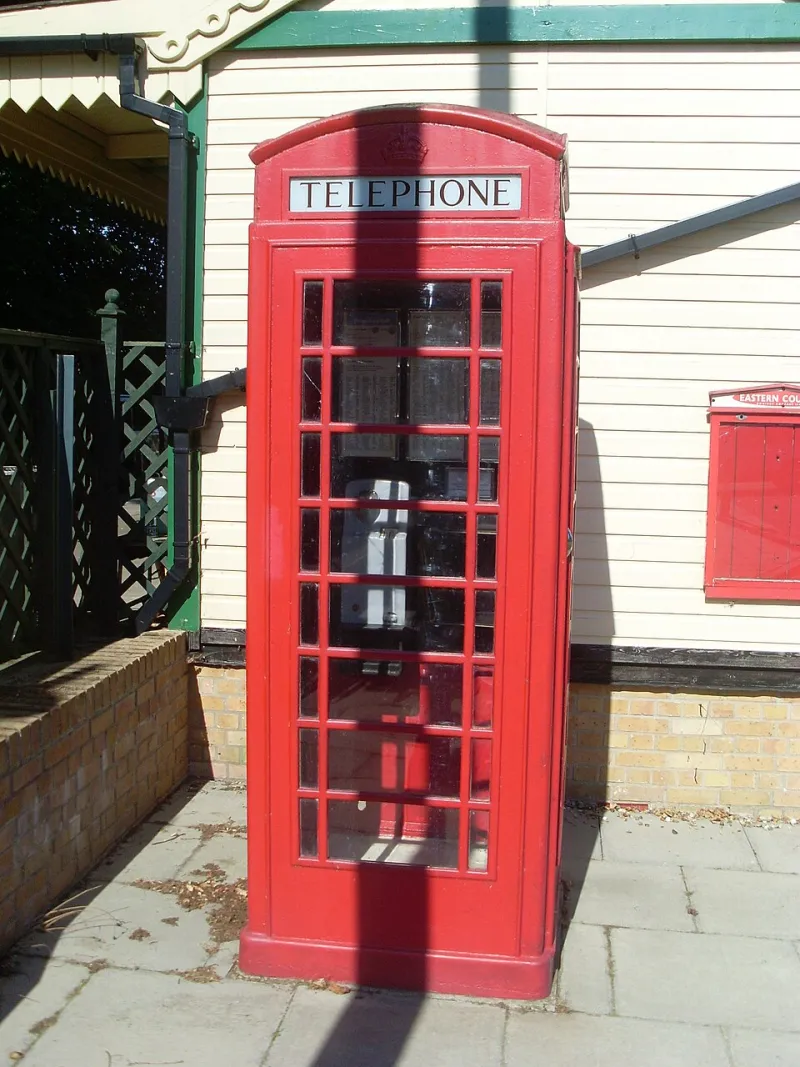
Photo: David Hillas , CC BY-SA 2.0, via Wikimedia Commons
There is a telephone box in a village I won't name, because half the pleasure of these places is that you find them by accident. It stands where it has stood since the 1930s, red paint refreshed by someone with a roller and a strong opinion. Inside, where the coin slot used to be, there's a shelf. On the shelf, behind glass, sits one object: a rusted horseshoe. Beside it, a laminated card explains that it was pulled out of the ford in 1962, that the ford has since been culverted, and that the horse was called Nell.
That's the museum. That's the whole museum. Free admission, open always, curator unknown.
The kiosk that refused to die
The red kiosk is the great survivor of British street furniture. BT's Adopt a Kiosk scheme, running since 2008, has handed thousands of decommissioned boxes to parish councils and community groups for a nominal pound, and the results have been wildly varied: libraries, defibrillator housings, coffee stalls, and — increasingly — tiny exhibition spaces. What was once a piece of national infrastructure has become a blank, glazed plinth about the size of a wardrobe, and Britain has responded by putting things in it.
What's striking about the current wave isn't the novelty. It's the curation. Nobody is filling a phone box with a jumble. They're choosing one thing, or one story, or one local fixation, and then letting it sit there.
What counts as a collection
A micro-museum might hold: a single fossil found during a sewer dig; a set of bus tickets from 1974 to 1998; forty photographs of the same oak tree; the last three bricks from a demolished cinema; a hand-drawn map of a lost railway line. The subject is almost never 'the history of the village' in any grand sense. It's a fragment, held up to the light.
There's a useful discipline in that. A large museum has to justify its square footage. A shed-sized gallery has to justify only its single shelf, and that changes the tone entirely. Labels stop lecturing. There's no timeline to complete, no gallery route to follow, no gift shop waiting to ambush you on the way out. You read four sentences, you look at one thing, you shut the door, you walk on.
The architecture of a pause
The unlikely venues are part of the appeal. Converted waiting rooms on preserved heritage railways. A bus shelter with a Perspex case bolted to the back wall. A former public convenience in a market town, now showing local printmakers on a three-month rota. A lean-to at the end of a village hall. A chapel so small the congregation now meets elsewhere and the pews have been turned to face a pinboard.
These spaces share one quality: they are places where people already stop. Not destinations — interruptions. The micro-museum understands that it is competing with a wait for a bus, not with a trip to the Tate, and it behaves accordingly.
Five rules for a room the size of a cupboard
- One idea per wall. In a two-metre-square space, a second theme is just clutter with an interpretation panel.
- Label, don't lecture. Two sentences and a date. If the visitor wants more, they'll ask the person with the key.
- Light is the whole ballgame. Every curator of a phone box eventually learns the difference between a warm LED strip and the grey mercy of daylight through dirty glass.
- Let the object breathe. Space around a single item does more work than any caption.
- The door is the invitation. An open door and a visible object beat any signage ever printed.
The economics of stubbornness
Almost none of these places run on a business model. They run on a rota. A £400 grant from a county councillor's locality budget, a raffle, a coffee morning, a retired joiner who builds the plinth for free, a keyholder three doors down who opens up when the coach party from the twinning association arrives.
This is not precarious in the way it looks from outside. It's small on purpose. There's no ambition to grow into a proper museum with a curator and a Friends charity and a fundraising strategy — though some do drift that way, and a few have discovered that smallness was the thing that made them worth visiting.
Smallness as a curatorial position
What the micro-museum boom really represents, in 2026, is a renegotiation of who gets to decide what's worth preserving. The answer, increasingly, is: whoever's willing to sweep out the waiting room on a Saturday morning.
That's a genuinely democratic act, and it produces a genuinely odd archive. The national collection tells you what the country thinks it is. The phone-box collection tells you what one parish noticed, on one afternoon, and couldn't bear to throw away.
Go and find one. They're not on the map, which is rather the point.